You are here:

Biological and biomedical

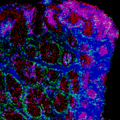
StreamLine image of oesophageal tissue

Raman spectroscopy has demonstrated the sensitivity to distinguish between cancerous, pre-cancerous and normal tissues, and its sensitivity to changes in cell metabolites and protein structures elevate it above competing spectroscopic techniques. Biological systems and materials provide unique challenges to Raman technology. Using Raman systems with Ultraviolet (UV) and Near Infrared (NIR) laser excitations allows the spectral region with the strongest fluorescence to be avoided. In addition to fluorescence, the majority of biological samples can be classified as weak Raman scatterers, with pigmented materials (such as vascular tissue) being strong absorbers of laser energy and thus more prone to laser damage. Renishaw has risen to these challenges by developing innovative techniques such as StreamLine™ imaging to maximise the effectiveness of Raman in studying biological and biomedical materials.

StreamLine™ chemical imaging is set to revolutionise spectroscopic analysis of biological materials. It allows biologists to take advantage of the superior chemical specificity and excellent spatial resolution associated with Raman spectroscopy to generate detailed chemical images at unprecedented speeds. In the image above, chemometric analysis of oesophageal tissue has identified that the concentration of glycogen is the primary differentiator between cells of differing maturity.

Documents for download


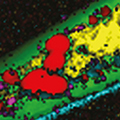
 StreamLine imaging of a complete tooth

StreamLine™ imaging of a complete tooth

Renishaw's new StreamLine technology applied to a tooth section. The unique capabilities offered by the SreamLine™ Raman imaging package allow rapid imaging of biological materials that would be destroyed by alternative imaging techniques

[870KB]

Adobe acrobat PDF 


Selected publications

Characterization of microorganisms using UV Resonance Raman Spectroscopy and chemometrics (2004), E Consuelo Lopez-Diez. Analytical Chemistry, 76, 585-591

Evaluation of surface-enhanced resonance Raman scattering for quantitative DNA analysis (2004), K Faulds et al, Analytical Chemistry, 76, 412-417

Surface-enhanced Raman scattering for bacterial characterization using a scanning electron microscope with a Raman spectroscopy interface (2004), R Jarvis et al, Analytical Chemistry 76, 5198-5202

Spectroscopic study of human lung epithelial cells (A549) in culture: living cells versus dead cells (2003), I Notingher et al, Biospectroscopy, 72, 230-240

Near-infrared Raman spectroscopy for the classification of epithelial pre-cancers and cancers (2002), N Stone et al, Journal of Raman Spectroscopy, 33, 564-573

Direct Raman imaging techniques for study of the subcellular distribution of a drug (2002), J Ling et al, Applied Optics, 6006-6017

Next steps

Contact us online if you require more information or you have a pricing query, or alternatively you may like to speak directly to your local Renishaw office.


Resources

Spectroscopy downloads

Newsletter

All the latest innovations in Raman spectroscopy - newsletter sign up here

StreamLine™ fast Raman imagingStreamLine™ image of a tablet

Renishaw's flexible and fast Raman imaging system

Raman image gallery

Silicon indent - peak position mapBrowse the Raman image gallery