Forensic analysis with Raman microscopy
Forensic science requires high-performance versatile analytical instruments which are reliable and traceable. Renishaw's Raman systems deliver these key requirements and are used in forensic science laboratories worldwide.
Versatility is evident
You can accurately detect and analyse small fragments of material with Renishaw's Raman systems.
- Identify particles, fibres and materials
- Analyse paint smears from vehicle collisions
- Identify narcotics
- Detect counterfeits
- Identify traces of explosives and gunshot residues
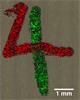
- Differentiate pen and printer inks, and determine the sequence with which lines cross on questioned documents


Reliable results
Renishaw's Raman systems produce data that accurately represents the sample, time and time again. They perform routine internal health checks so you can be confident in your data.
Investigate using different techniques
Raman analysis is non-contacting and non-destructive. You can analyse your samples multiple times and subsequently study them with other techniques.
Bring chemical analysis power to your scanning electron microscope (SEM), by adding a Renishaw inLux™ SEM Raman interface. Identify not just the elements present but their chemical structures too.
When speed is of the essence
Rapid analysis of even minute particles is at the heart of forensic science. Some key forensic techniques are slow. With Renishaw Raman systems you can quickly identify suspect materials or detect target substances.
Image gallery





Watch Raman Explored seminar presentations
Our recent seminar featured groundbreaking research including:
- Art authentication
- Cultural heritage and conservation
- Minerals, fossils and fossil forgeries
- The origin of the Altar Stone at Stonehenge
- Spectroscopy on Mars
Find out how Raman spectroscopy is making an impact in cultural heritage, conservation and geoscience!
We're here when you need us
To find out more about this application area, or an application that isn't covered here, contact our applications team.
Contact our applications team
Download document


Related stories
Trace analysis in fingerprints
To be truly useful in a highly practical and physical environment, chemical imaging needs to be versatile and forgiving over a range of object surfaces. We put Raman imaging to the test by analysing a fingerprint on the side of a soda can.
How Raman analysis can help identify forged documents
Raman analysis allows for rapid, non-destructive testing of questioned areas with the specificity to distinguish different ink types that may look identical. We test a method for analysing crossed ink lines to identify possible forgeries.