Climate-related risks and opportunities
Our processes for identifying climate-related risks and opportunities
As part of ongoing work to strengthen the way we identify, assess and manage our climate-related risks and opportunities, we carried out a new deep-dive assessment. The basis for this assessment was a series of scenario analysis workshops with stakeholders from across the business, including representatives from our sales regions, product divisions, manufacturing and procurement, as well as corporate functions such as HR, Finance, Legal and Sustainability.
During the sessions, we considered three scenarios, over three-time horizons, to assess the climate-related physical and transitional risks and opportunities facing our business. As a result, we identified 68 climate-related risks and opportunities, which we consolidated into consistent themes. We scored each theme based on geography, likelihood of occurrence and potential impact, to create a shortlist of five risks and five opportunities.
This shortlist was approved by our ESG Committee and then financially quantified, with support from our finance and strategy colleagues, to assess affected revenue projections based on a range of factors.
Climate-related physical risk definitions
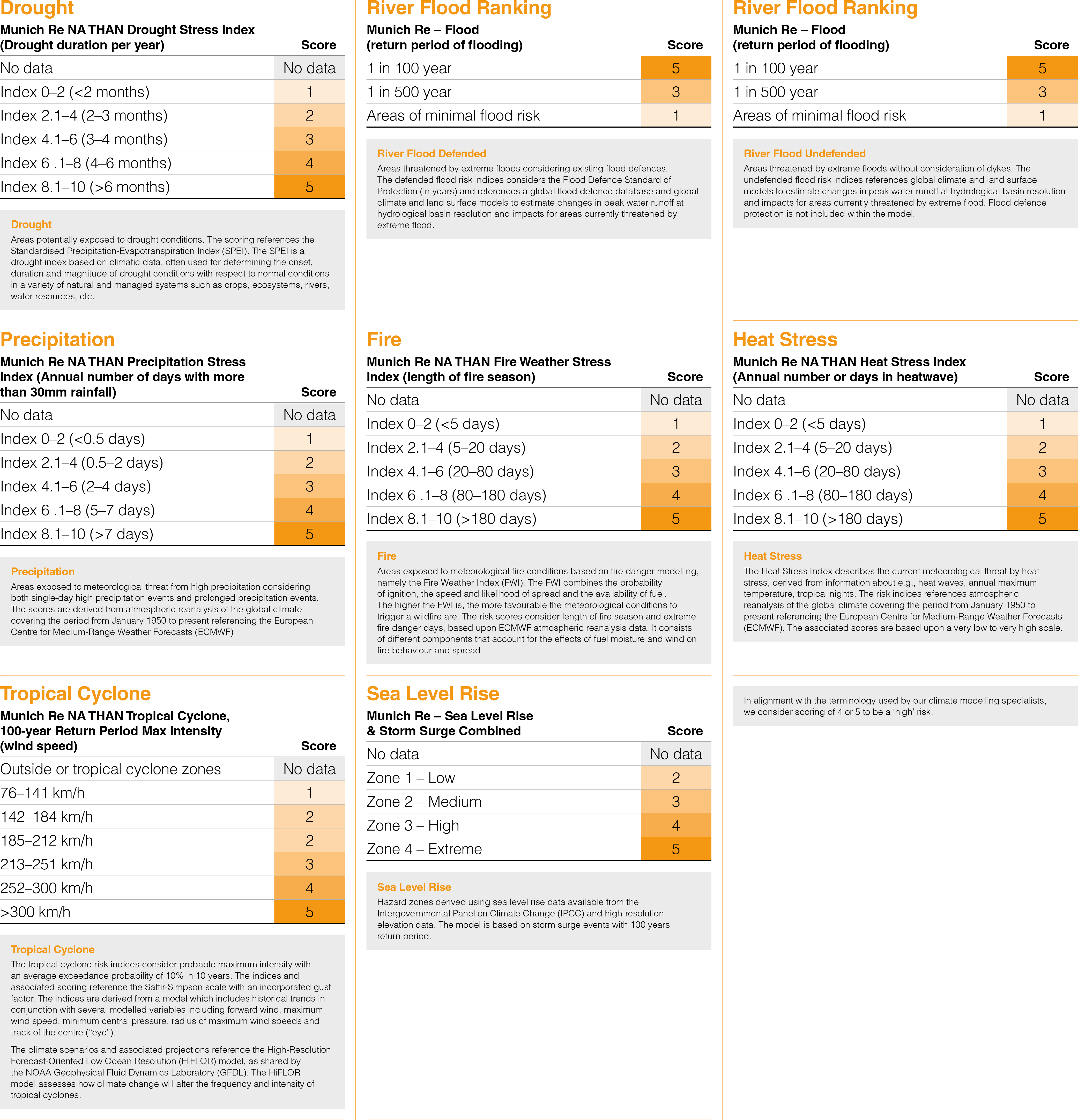
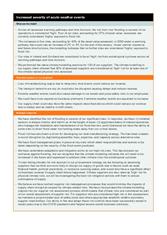
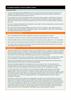
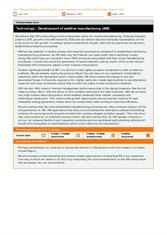
1To assess physical risk, Willis Tower Watson's Climate Diagnostic Tool assesses present day and future exposure to a range of extreme (acute) weather-related events as well as chronic climate-related hazards. The selected scenarios for the physical risk assessment were based on Representative Concentration Pathways RCP2.6 (1.5oc), RCP4.5 (2-3oc) and RCP8.5 (4oc) using modified climate risk models to simulate future climate under 2030, 2050 and 2100 time horizons.
2Asset value includes i) land and buildings (with buildings included at insured reinstatement value), ii) other fixed assets (at net book value), iii) inventory (at Group cost), at 31 March 2023.
31.5 ºC warming pathway scenarios: The assessed climate-related trends were generated using the peer-reviewed International Energy Agency (IEA) “Net Zero by 2050 – A Roadmap for the Global Energy Sector” report and the 1.5 ºC aligned targets our major customers have committed to.