Why calibrate your industrial robot
Gravity and bending
Gravity and bending effects in a six-axis robot arise because each joint and link must support the weight of all components further along the kinematic chain. As gravity acts on the mass of the robot's links and tooling, it creates torque at each joint, causing small but measurable deflections. These loads also induce bending in the robot's arms, which manifests as slight rotations around preceding joint axes and compliance errors that accumulate toward the tool centre point. Together, these effects reduce positional accuracy and repeatability, especially under heavier payloads or extended reaches.
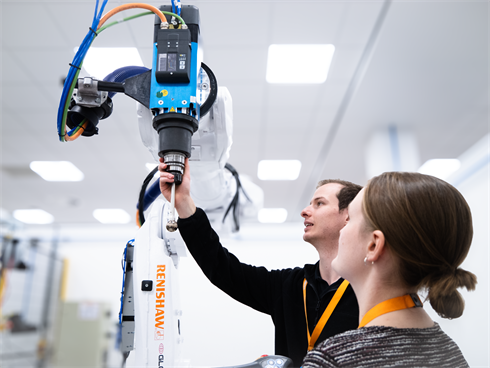
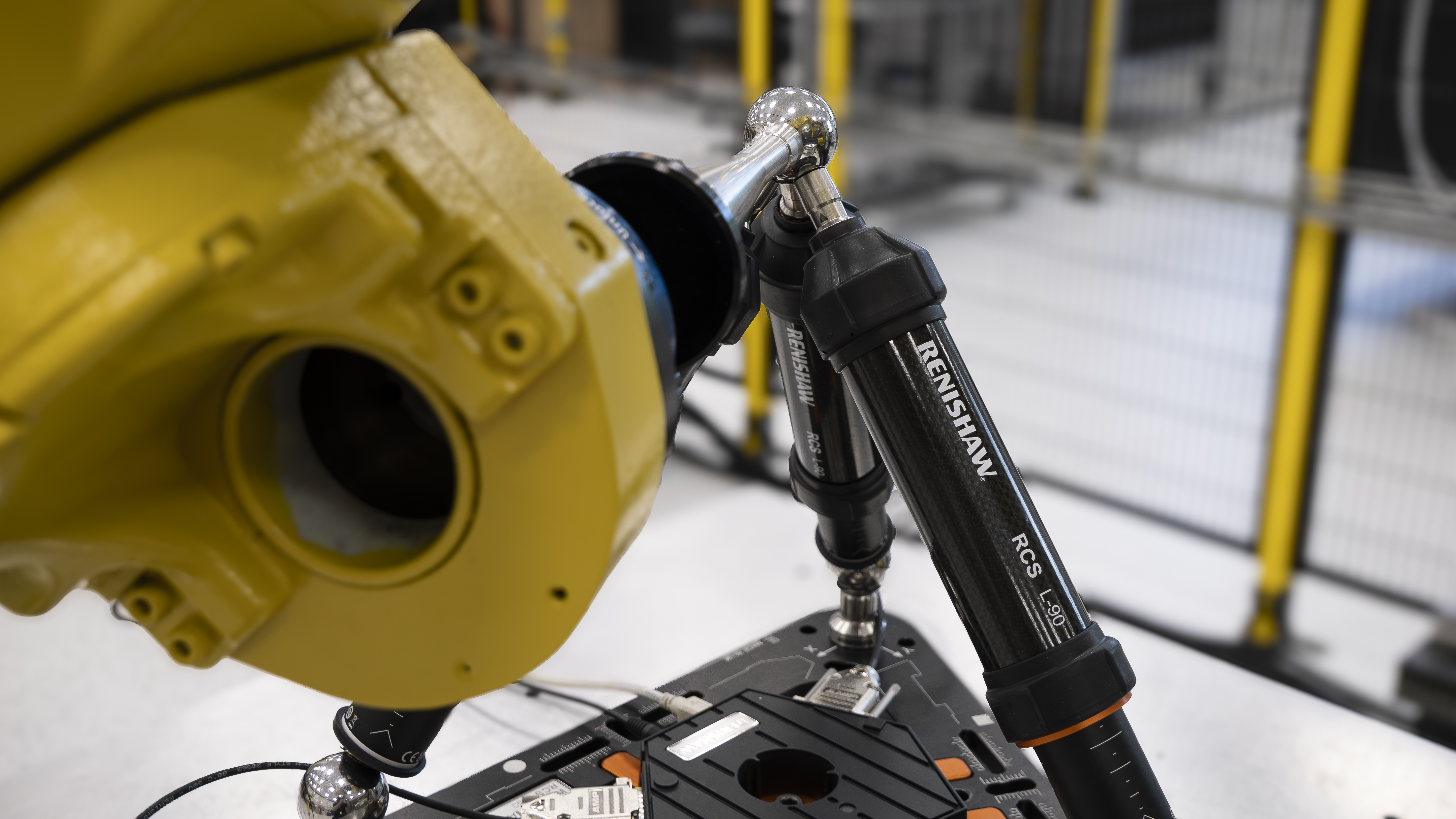
Fully calibrating a robot matters because it directly improves how accurately, consistently and reliably the robot understands and executes its own motion. Calibration updates the robot's geometric model (DH parameters), compensates for mechanical tolerances, and accounts for real-world effects like gravity-induced bending — all of which drift over time or vary between units. This introduces a host of benefits:
- Maximises accuracy: Calibration fine-tunes parameters so the robot tool goes precisely where it is programmed to.
- Enables offline programming: A calibrated robot's "digital twin" closely matches its physical positioning. This allows you to generate paths on a computer and load them onto the robot without spending hours manually teaching it individual points on the factory floor.
- Prevents rework: Ensures operations like welding, drilling, or dispensing are performed perfectly, reducing waste and part rejection rates.
In short: full calibration restores the robot to a known, traceable, high-accuracy state so it performs as intended in demanding applications.
Discover RCS product series
Explore the RCS product series to see how each solution is designed to address specific challenges in robot accuracy, health, and calibration. Discover the tools that fit your needs and how they work together to support reliable, high-performance robotics.
Contact our sales team today
Complete the form below to find out more information and speak to an expert.