Renishaw celebrates 150 years of mineral science research at Mineralogical Society conference
July 2026
Renishaw has affirmed its commitment to advancing research in Earth science and mineralogy by sponsoring The Mineralogical Society at 150: Past Discoveries and Future Frontiers, held at the University of Manchester, UK, from June 23–25, 2026.
The three-day international conference celebrated the 150th anniversary of the Mineralogical Society of the UK and Ireland, bringing together researchers, academics, industry professionals and students, to remember the Society's history while exploring the future of mineral sciences.
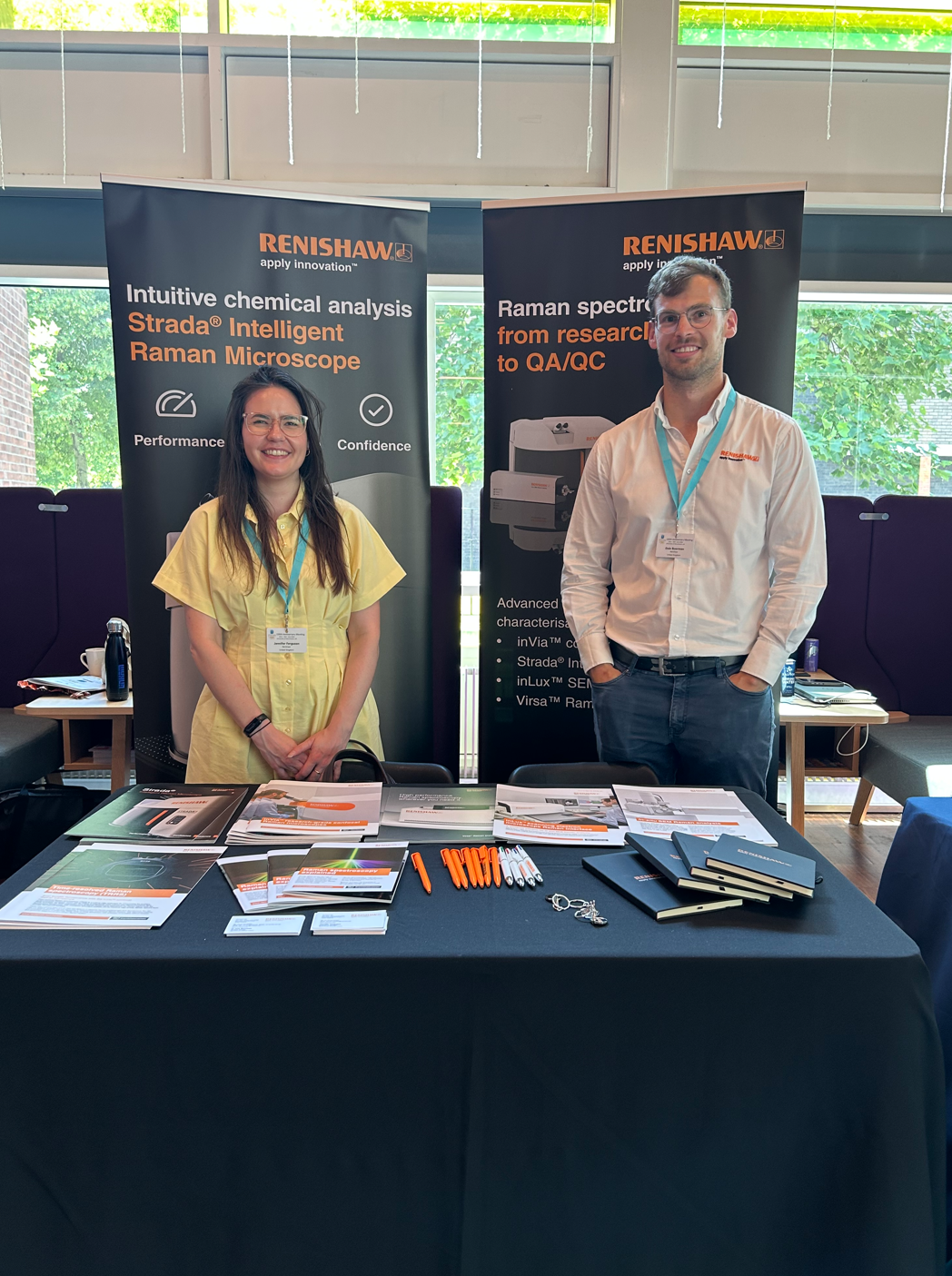
As a sponsor of the meeting, Renishaw welcomed delegates to its exhibition stand, where Dr Dale Boorman, Sales Manager, and Dr Jennifer Ferguson, Applications Manager, showcased the company's Raman spectroscopy technologies and discussed their applications in Earth science and mineralogical research. The Renishaw representatives also attended presentations and poster sessions, engaging with current research and emerging developments across the field from industry professionals, academics and students.
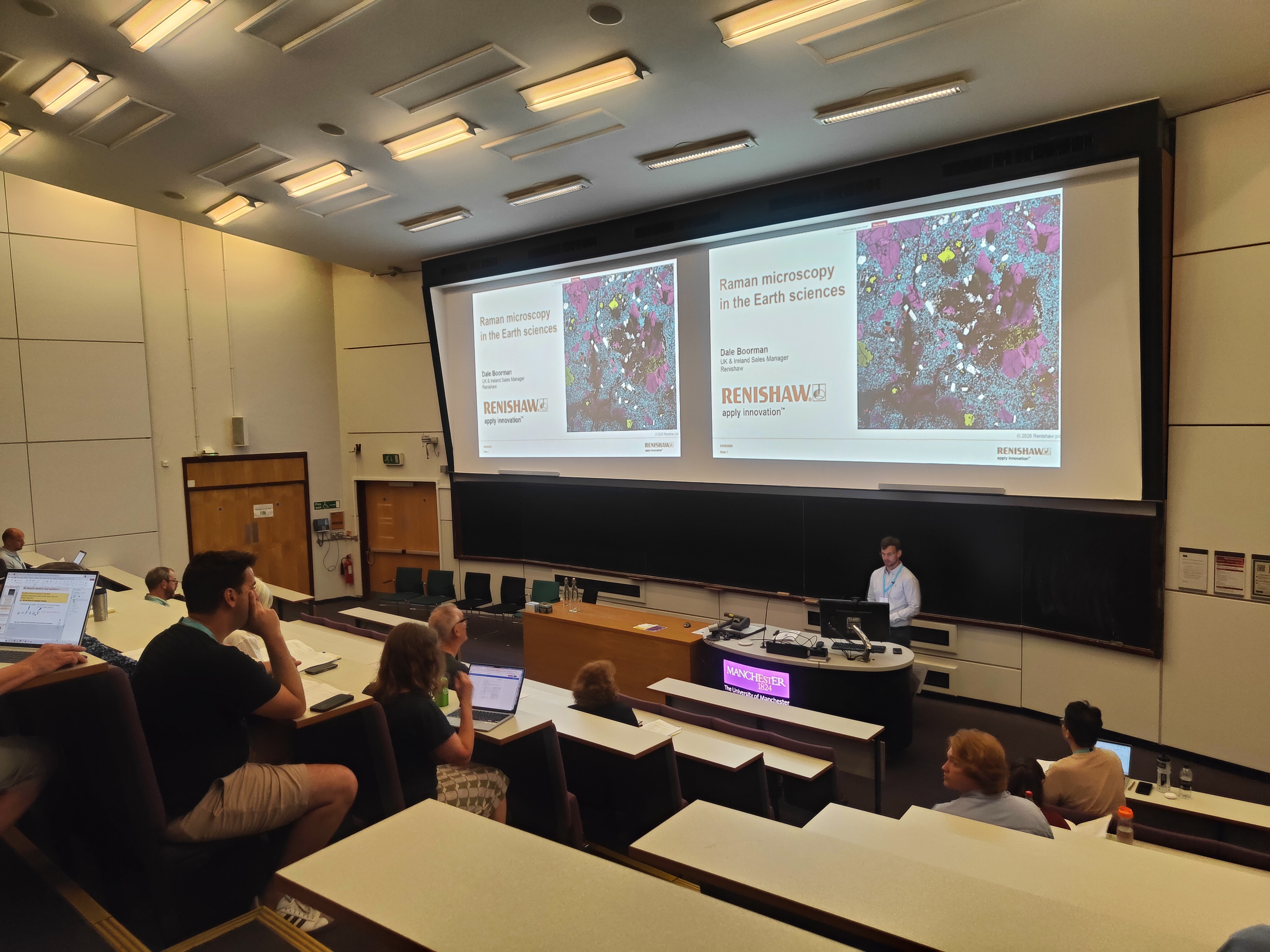
As part of the conference programme, Dr Boorman delivered a talk highlighting how more than 30 years of Renishaw's innovation in Raman spectroscopy has enabled researchers in industry and academia to better understand the chemical composition and structure of geological materials.
The presentation demonstrated how Raman imaging can reveal detailed chemical information within mineral samples, using the characterisation of volcanic glass from Mount St Helens as an example of how the technique supports geological research. Dr Boorman also highlighted Renishaw's LiveTrack™ focus-tracking technology, which automatically maintains focus across uneven sample surfaces without requiring pre-scanning or prior knowledge of the sample topography. This enables researchers to generate high-quality chemical images while simultaneously mapping surface features, allowing chemistry and topography to be directly correlated in both 2D and 3D.
The talk also showcased the capabilities of Renishaw's Virsa™ Raman Analyser; a portable fibre-optic Raman system designed for analysing samples that cannot easily be transported to the laboratory. Combining remote fibre-optic probes with LiveTrack technology, the system enables high-quality Raman analysis of large or immovable geological specimens in situ. Dr Boorman illustrated this capability through research investigating the origin of Stonehenge's Altar Stone, where Raman analysis was performed directly on the monument to provide new insights into the stone's geological provenance.
Attendees also learned about Renishaw's correlative scanning electron microscopy (SEM)-Raman technology, enabled by the inLux™ SEM Raman interface. By integrating Raman spectroscopy directly within the SEM chamber, researchers can collect complementary structural, chemical and morphological information from precisely the same location on a sample, providing a more complete understanding of complex mineral systems.
The presentation concluded with examples of time-resolved Raman spectroscopy (TRRS), which overcomes the fluorescence and thermal radiation that can limit conventional Raman measurements. The technology enables high-quality Raman spectra to be collected from highly fluorescent materials and samples at temperatures of up to 1500 °C, opening new possibilities for studying mineral behaviour under extreme conditions relevant to geological processes.
By sponsoring the Mineralogical Society's 150th anniversary conference, Renishaw reinforced its ongoing support for the global mineral science community, while demonstrating how continued innovation in Raman spectroscopy is helping researchers address increasingly complex challenges across Earth science, mineralogy and geoscience.
Downloads
For further images, videos, company biographies or information on Renishaw and its products, visit our Media Hub.