RLE interferometric laser encoder systems
High linearity and measurement stability make Renishaw's RLE interferometric laser encoders ideal for high-performance motion control applications. Find out how this next-generation modular system can maximise throughput and machine uptime.
Optimise high precision with less complexity
Interferometric laser encoders provide the ultimate accuracy in linear position feedback. Renishaw's laser encoders feature an optical fibre delivery system that allows the laser unit to be mounted remotely. This eliminates any thermal impact of the laser on the motion control system.
Building on our long-standing expertise, we have developed a range of next-generation laser encoders. The product family comprises three systems - RLE100, RLE200 and RLE300 - to serve advanced semiconductor manufacturing applications.
Each RLE system consists of an RLU laser unit with one or two detector heads, connected by optical fibres and data cables. The RLU laser units feature enhanced frequency stability and reduced positional noise.
A key advantage of the next-generation technology is its modular plug-and-play architecture. Laser units, detector heads and fibre assemblies can be combined independently, reducing maintenance overheads and simplifying inventory management. New detachable optical fibres allow laser units to be replaced without disturbing the installed fibres or detector heads, enabling quick servicing without lengthy realignment procedures.
The RLE100 system, using the RLU100 laser unit, is the direct successor to the RLE10 system, offering enhanced measurement performance (laser frequency stability) for in-air applications.
The RLE200 system, including the RLU200 laser unit, replaces the RLE20 system as the recommended solution for higher-performance applications, particularly those operating in vacuum environments. It includes new automatic Sub-Divisional Error (SDE) correction.
Completing the range, the new RLE300 laser encoder, with the RLU300 laser unit, provides even higher metrology performance for the most demanding semiconductor manufacturing applications.
A range of accessories, such as periscopes for multi-axis applications, cables and connectors, allow you to design your ideal system set-up.

Watch our introduction to the next-generation RLE interferometric laser encoders
What are the benefits of Renishaw laser encoders?
Renishaw's next-generation laser encoders are compatible with existing mechanical mounting arrangements, allowing an easy upgrade path from the legacy RLE10 and RLE20 laser encoders. Other benefits include:
- Low latency: Renishaw's laser encoder systems include an advanced homodyne detection scheme, which combines minimal latency with high motion velocity and no restriction on stage acceleration.
- Next-level performance: An advanced optical scheme maximises frequency stability and reduces noise and positional uncertainty over the full range of motion. The new RLE300 high-accuracy laser encoder offers enhanced frequency stability for the most demanding position measurement applications.
- Detachable fibres: A new fibre-optic connector system allows the optical fibres to be detached directly from the laser unit. Laser units can then be removed or replaced without disturbing the existing fibres and detector head(s) installed on the machine. This maintains the optical alignment of the measurement set-up and removes the need for realignment procedures. As a result, the time required to exchange laser units is significantly reduced—typically to only a few minutes.
- Extended range: Compared to the legacy RLE10 and RLE20 products, the operating range of these new laser encoders has been doubled to an angular range of ±400 µrad and a linear range of 2 m.
- Plug and play: Modular system design allows any laser unit to operate with any Renishaw detector head, removing the need for fixed unit-head pairings. Components can be purchased, stocked, and replaced independently, providing greater flexibility in both installation and maintenance planning.
- Enhanced diagnostics: The new laser encoder technology platform introduces enhanced diagnostics and condition monitoring capabilities. To help improve predictive maintenance and maximise machine uptime, users can access real-time system information through an integrated diagnostic interface, including signal quality, operating status, and fault reporting.
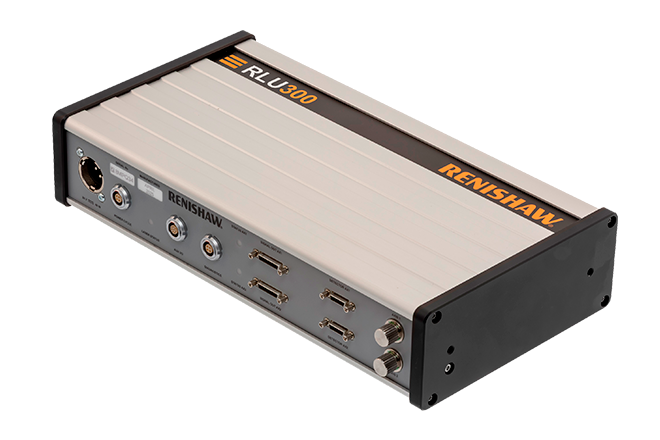
The RLU100, RLU200 and RLU300 laser units include precision electronic and opto-mechanical assemblies to provide accurate position feedback for next-generation motion systems.
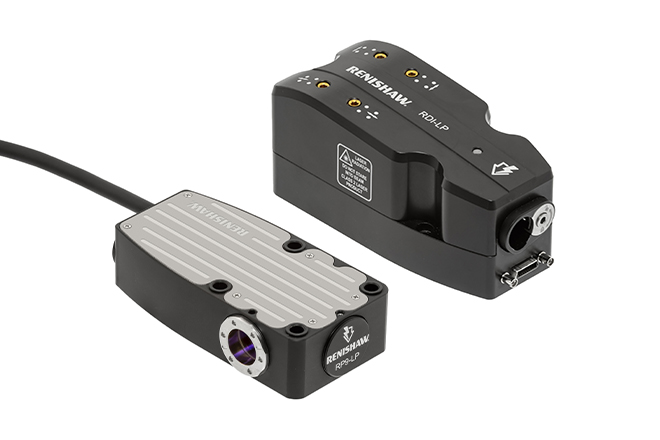
A range of differential interferometry (DI) and plane mirror interferometry (PMI) detector heads provide accurate position measurement to meet the requirements of motion control applications.
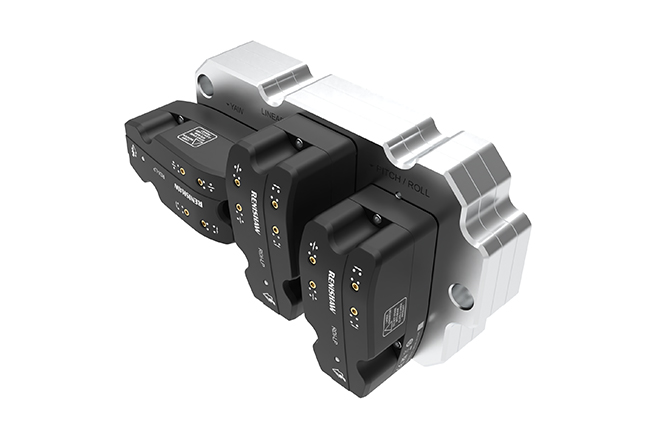
Our accessories support accurate installation, alignment, and measurement helping to optimise performance and improve usability. They also enable multi-axis configurations and multiple degrees of freedom measurement.
Laser encoder questions answered
Browse our frequently asked questions covering laser encoder systems, installation and sales support. We aim to help you understand the advantages of Renishaw laser encoder technology and make choosing and installing the right solution simple and easy.
Downloads: data sheets and technical documents
Further information about the technical specifications of the Renishaw laser encoder products, such as data sheets and installation guides, are available from our technical downloads section.
Discover our range of interferometric laser encoders designed to meet your high-accuracy motion control needs.
Contact our sales team today
Get in contact with your local office to find out more information and speak to an expert.